


Yes, men have pelvic floors too.
Constipation, urinary dribbling, and that constant feeling of needing to pee? Your pelvic floor might have something to do with it.
When most people hear the words pelvic floor physical therapy, they immediately think of pregnancy, postpartum recovery, or women’s health.
But here’s something we wish more men knew: You have a pelvic floor, too. And it can cause just as many problems.
If you’re constantly dealing with constipation, struggling to empty your bladder completely, or noticing a few drops of urine leaking into your underwear after you’ve finished peeing, your pelvic floor could be contributing to those symptoms.
And no, these aren’t necessarily things you just have to accept as part of getting older.
At Positive Impact Physical Therapy, we treat men with pelvic floor dysfunction, too. And often, the symptoms that bring them through our doors are things they’ve been dealing with for years without realizing physical therapy could help.
First Things First: What Exactly Is the Male Pelvic Floor?
Your pelvic floor is a group of muscles that sits at the bottom of your pelvis, extending from your pubic bone to your tailbone.
Think of these muscles as a supportive hammock that helps manage several important functions:
- Bladder control: Helping you hold urine and release it when you’re ready.
- Bowel movements: Coordinating relaxation and contraction so you can pass stool without excessive straining.
- Sexual function: Contributing to erections, ejaculation, and orgasm.
- Core stability: Working alongside your diaphragm, abdominal muscles, and deep spinal muscles to manage pressure and support movement.
Like any other muscle group in your body, your pelvic floor needs to be able to contract, relax, and coordinate with the rest of your body.
And here’s where things get interesting: A pelvic floor that’s too tense can cause just as many problems as one that’s too weak.
That’s why telling every man with pelvic floor symptoms to start doing Kegels isn’t necessarily the answer.
Sometimes, those muscles need to learn how to relax before they can function properly.
Symptoms of a Pelvic Floor Problem
Chronic Constipation
Let’s talk about something that a lot of men experience but very few want to discuss: chronic constipation.
Maybe you have a bowel movement every day, but you spend 20 minutes on the toilet trying to get everything out. Maybe you’re constantly straining, feeling like you haven’t completely emptied, or relying on stool softeners just to stay regular.
Here’s something you might not realize: You can have a bowel movement every single day and still experience constipation.
Constipation isn’t just about how frequently you go. It’s also about how easily stool passes, its consistency, and whether you feel like you’ve completely emptied.
So what does your pelvic floor have to do with pooping?
During a normal bowel movement, your pelvic floor muscles need to relax and coordinate with your abdominal muscles.
But what happens when they don’t ? You push. You strain. You hold your breath. You push harder.
And sometimes, you’re essentially trying to force stool through muscles that aren’t relaxing appropriately.
Signs your pelvic floor might be contributing to constipation:
- Straining even when your stool is soft
- Feeling like something is blocking stool from coming out
- Spending excessive time sitting on the toilet
- Feeling like you haven’t completely emptied
- Needing to change positions or use your fingers to help pass stool
- Experiencing pelvic, rectal, or tailbone discomfort
Dribbling When You Pee
You finish urinating, shake things off, zip up your pants, and walk away. Then it happens.
A few drops of urine end up in your underwear.
Sound familiar?
This is called post-void dribbling, and it’s a relatively common urinary complaint in men.
But common doesn’t mean it’s something you have to ignore.
Why does it happen?
After you urinate, a small amount of urine can remain in the urethra, the tube that carries urine out of your body. If those muscles aren’t functioning or coordinating effectively, some urine may remain in the urethra and leak out once you start moving.
It’s important to distinguish this from urine remaining in the bladder itself. These are different issues and may require different approaches.
Other urinary symptoms worth paying attention to:
- Feeling like you haven’t completely emptied your bladder
- Needing to urinate frequently
- Experiencing a sudden, strong urge to pee
- Having difficulty starting your urine stream
- A weak or intermittent urine stream
- Leaking urine during exercise, coughing, or lifting
- Waking up multiple times at night to urinate
And then there’s the prostate
Pelvic floor physical therapy can also be an important part of care for men experiencing prostate-related symptoms. The prostate is definitely in the neighborhood of the pelvic floor, and because it is so close to the bladder, urinary symptoms are fairly common if a man is having prostate issues.
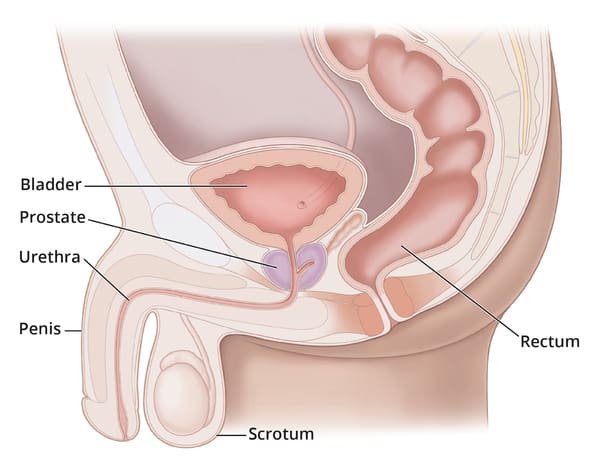
This includes men recovering from prostate surgery, such as a prostatectomy, as well as some men experiencing chronic prostatitis.
After prostate surgery, changes to the urinary system can lead to leakage, urgency, and difficulty controlling urine during daily activities.
Pelvic floor rehabilitation can help improve muscle function and urinary control during recovery.
Men with pelvic pain may also benefit from pelvic floor therapy when muscle tenderness, excessive tension, or impaired relaxation contributes to their symptoms.
Importantly, not every prostate-related symptom is caused by the pelvic floor, and pelvic floor PT does not replace evaluation or treatment by a urologist.
But it can be an incredibly valuable piece of a comprehensive treatment plan.
Some signs that it may be worth getting evaluated by a Pelvic PT include:
- Urinary urgency or frequency
- Getting up multiple times at night to pee
- Dribbling after urination or difficulty fully emptying
- Constipation or straining to have a bowel movement
- Pelvic, groin, tailbone, or genital pain
- Pain with sexual activity or ejaculation
- Urinary leakage
- Changes in bladder control before or after prostate surgery
- Persistent low back, hip, or pelvic pain
And no, treatment does not automatically mean doing Kegels.
Pelvic floor physical therapy isn’t just for women who have had babies.
It’s for men who are tired of straining on the toilet.
It’s for men who are frustrated by urinary dribbling.
It’s for men recovering from prostate surgery, dealing with pelvic pain, or struggling with bladder and bowel control.
And it’s for men who simply want their bodies to function better.
You shouldn’t have to organize your life around your bladder or your bowels.
At Positive Impact Physical Therapy in Marmora, NJ, we provide individualized, one-on-one pelvic and orthopedic physical therapy to help you understand what’s contributing to your symptoms and build a plan to address them.
We’re not here to hand you a generic list of Kegels and send you on your way.
We’re here to figure out WHY you’re experiencing these symptoms and help you get back to doing the things you enjoy.
Ready to stop guessing and start addressing the problem?
Call 609-542-2262 to schedule an evaluation at Positive Impact Physical Therapy.
Because pelvic health is men’s health, too.


